

BitcoinWorld
Crypto Fear and Greed Index Drops to 36: What It Signals for Market Sentiment
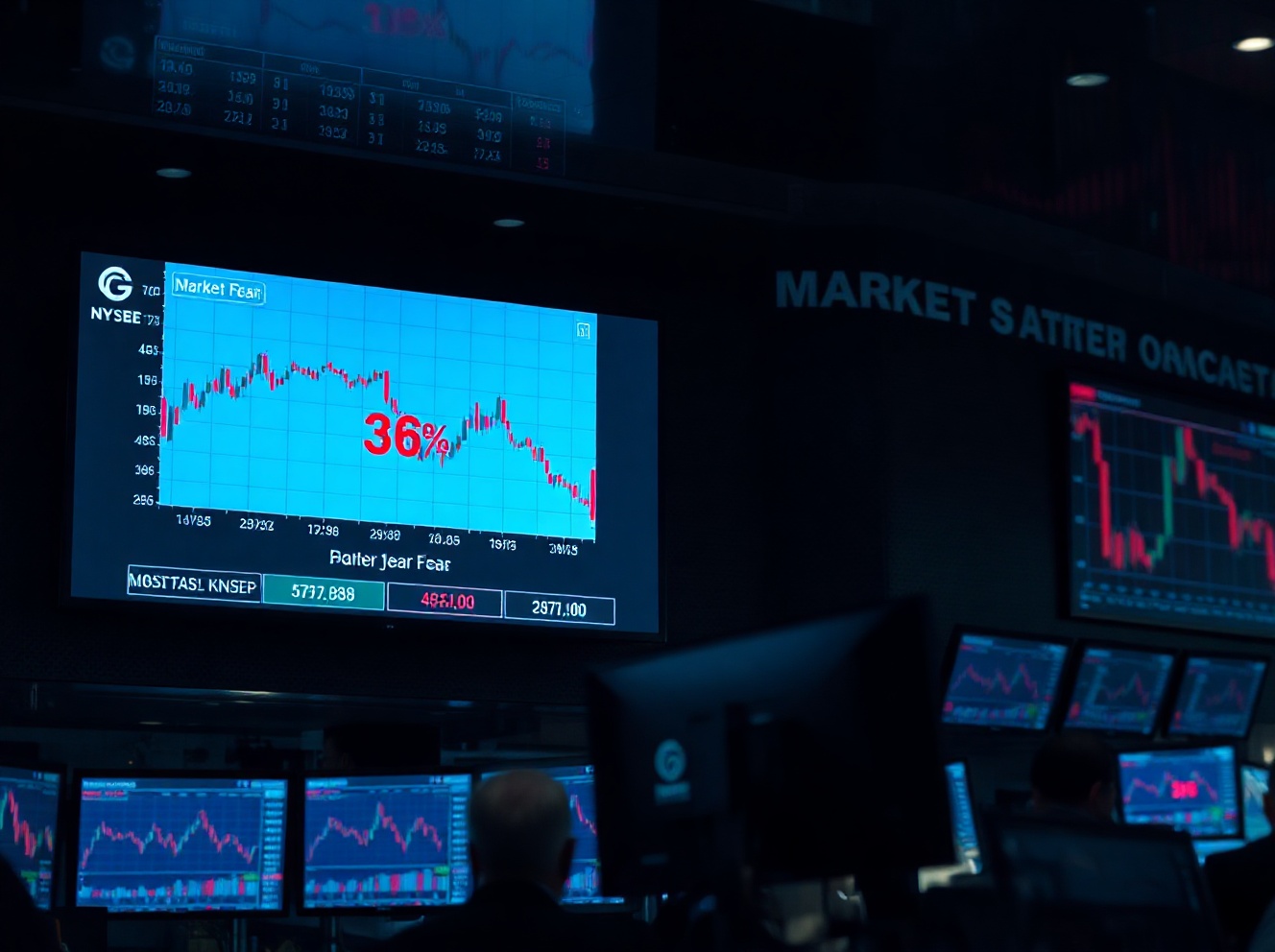
The Crypto Fear and Greed Index, a widely watched barometer of market emotion, has slipped to 36, down one point from the previous day. The reading keeps the index firmly in the ‘fear’ zone, reflecting a cautious mood among cryptocurrency investors. While the drop is modest, it underscores the persistent uncertainty that has characterized digital asset markets in recent weeks.
Understanding the Fear and Greed Index
CoinMarketCap’s in-house index aggregates multiple data points to gauge whether investors are acting out of fear or greed. The scale runs from 0 to 100, with values closer to zero indicating extreme fear and values near 100 signaling extreme optimism. A reading of 36 suggests that fear is the dominant emotion, though it is not at panic levels.
The index is calculated using several components:
- Price momentum: The performance of the top 10 cryptocurrencies by market capitalization, measured against their 30-day and 90-day averages.
- Market volatility: Daily price fluctuations, with higher volatility contributing to a lower score.
- Derivatives indicators: The put/call ratio and other options market data that reflect trader positioning.
- Stablecoin supply ratio (SSR): A metric that compares the market cap of stablecoins to that of Bitcoin, indicating potential buying power.
- Search CoinMarketCap’s own search volume for crypto-related terms, which can signal retail interest.
By combining these factors, the index aims to provide a snapshot of the market’s emotional state, which some traders use as a contrarian indicator. Historically, extreme fear readings have sometimes preceded market rebounds, while extreme greed has often coincided with local tops.
What the Latest Reading Means for Investors
The one-point decline is minor, but it comes after a period of relative stability. Over the past month, the index has oscillated between the low 30s and mid-40s, suggesting that investors remain hesitant to commit significant capital. This hesitancy is reflected in subdued trading volumes and a lack of clear directional momentum in major cryptocurrencies.
For long-term holders, a fear reading is not necessarily a negative signal. Historically, periods of fear have offered entry points for those with a higher risk tolerance. However, the current environment is also shaped by macroeconomic factors, including interest rate expectations and regulatory developments, which can override sentiment-based signals.
Market analysts often caution against reading too much into a single day’s change. The index is a lagging indicator, and its components are backward-looking. A sustained move below 30 would be more notable, as it would indicate a deeper level of capitulation.
Why This Matters for the Broader Crypto Market
The Fear and Greed Index is not just a curiosity; it is used by some institutional investors and trading algorithms as a risk gauge. A prolonged period of fear can lead to reduced liquidity and wider spreads, making it harder for large players to execute trades without moving prices. Conversely, a shift toward greed could signal the return of retail participation, which often drives volatility.
It is also worth noting that the index’s methodology is not universal. Different platforms, such as Alternative.me, use their own formulas and may produce slightly different readings. Investors should therefore treat the index as one of many tools, rather than a definitive predictor.
Conclusion
The Crypto Fear and Greed Index at 36 reflects a market that is cautious but not panicked. The modest decline suggests that sentiment remains fragile, with investors waiting for clearer signals before committing to new positions. While fear can sometimes be a contrarian buy signal, it is essential to consider the broader context, including macroeconomic trends and regulatory news, before making any decisions. As always, the index is a snapshot, not a forecast.
FAQs
Q1: What is the Crypto Fear and Greed Index?
The Crypto Fear and Greed Index is a metric that gauges market sentiment by analyzing price movements, volatility, derivatives data, stablecoin supply, and search trends. Scores range from 0 (extreme fear) to 100 (extreme greed).
Q2: Is a reading of 36 a bearish signal?
Not necessarily. While it indicates that fear is prevalent, it does not predict price direction. Some traders view extreme fear as a potential buying opportunity, but it is important to consider other factors like market fundamentals and external news.
Q3: How often is the index updated?
CoinMarketCap updates its Fear and Greed Index daily, providing a real-time snapshot of sentiment. However, the underlying data is based on trailing averages, so daily changes are usually small.
This post Crypto Fear and Greed Index Drops to 36: What It Signals for Market Sentiment first appeared on BitcoinWorld.